by Pastor Ed Visser
“Judas, are you betraying the Son of Man with a kiss?…
JESUS: “… the Son of Man will be seated at the right hand of the mighty God.”
CAIAPHAS: “Are you then the Son of God?”
Luke 22:48, 69-70
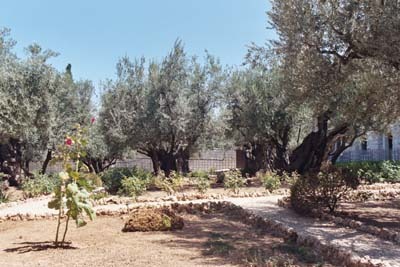 As the group with whom I visited Israel sat in the Garden of Gethsemane, thinking back to the long evening Jesus spent there before his crucifixion, we focused on an aspect of his suffering that often goes over-looked: betrayal. Amidst ancient olive trees, some possibly old enough to have witnessed Jesus’ prayer, we pondered the Jewish view of betrayal in the first century. The most obvious betrayer was Judas Iscariot, who, for 30 pieces of silver, led the Temple Guard down through the Kidron Valley, and up to the Garden. There he targeted Jesus with a kiss, making an affectionate middle eastern greeting now a hideous symbol of betrayal (irony not lost on Jesus).
Neatly framed between the olive trees one can see the eastern gate of the Temple Mount. Under the cover of darkness, Jesus was escorted up to the Temple and into a room on the southern side called the “Sanhedrin,” after the court that usually met there. This, however, was not an official or 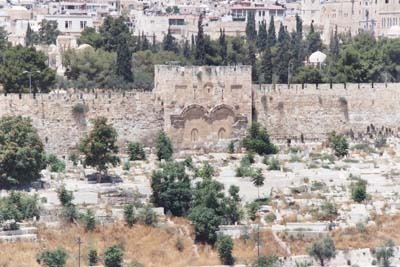 even legal meeting of the court. Rather, it appears a hastily called session of some of its members, mostly priestly leaders, headed by Caiaphas.
What follows is a fascinating exchange between the High Priest and Jesus. Jesus answers the question of Caiaphas (are you Messiah?) in a very Jewish way. Jesus alludes to Psalm 110:1, historically linked by the sages with Psalm 2:7 (God: You are my Son), both referring to the coming Messiah. Caiaphas picks up Jesus’ cue, alluding to Psalm 2:7: are you then the Son of God? With Jesus’ affirmation, the “council” brings Jesus before Pilate, the Roman governor of Judea, with three political charges showing Jesus to be a revolutionary against Rome.
What the high priests do, turning Jesus over to the Romans, would not have received approval by the populace. To be a moser, one who betrays a fellow Jew, and especially handing him over to pagans, was considered by the Jews an unforgivable sin! Judas, the first moser, realizes this and responds with suicide. The crime of the priests was even worse; yet they show no remorse, likely believing they saved the nation from Roman intervention. Acts 4 shows their later attempt to keep their actions (guilt?) quiet.
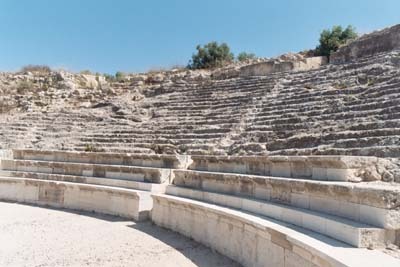
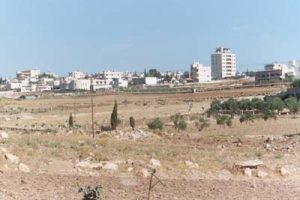 One of the places I was able to visit while in Israel was the “little town of Bethlehem.” I say this with gratitude because, despite all the peaceful scenes of Bethlehem on our Christmas cards, today it is often a place of strife, off limits to tourists.
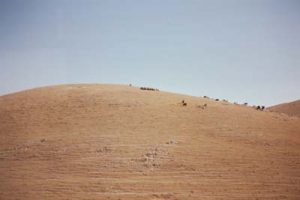 The Lord is my shepherd,
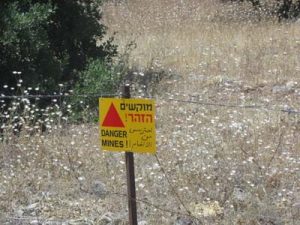 Israel is a land between the Mediterranean Sea to the west, the Arabian Desert to the east. Both proved difficult for travel. Early ships were not made to survive the raging sea, especially in the fall and winter months. And people were not made to bear the intense heat and dryness of the
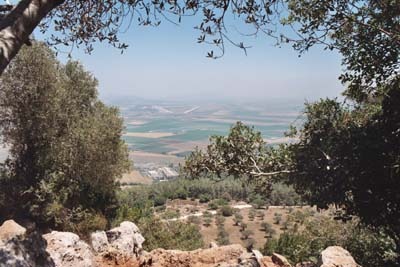
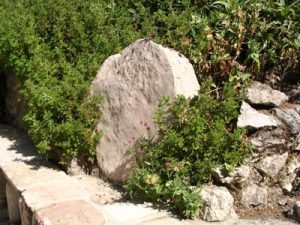 When you visit Jerusalem, you’re directed to two competing sites for the crucifixion and burial of Jesus. The oldest site, the Church of the Holy Sepulcher, is near the center of the present-day Old City. Destroyed and rebuilt a number of times, parts of the church date back to 135 AD, although the site itself is known to be the center of liturgical celebrations for 35 years after Jesus’ death. It is the traditional site of and divided among six groups: Catholic, Armenian, Coptic, Greek Orthodox, Syrian, and Ethiopian churches.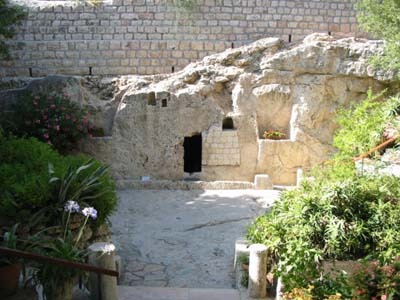
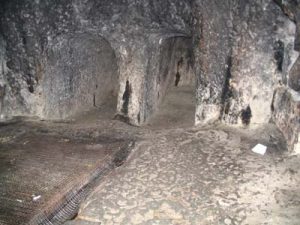 built over an old quarry (usual crucifixion site; you can see the chisel marks) and has a an interesting tomb in its basement (below the ornate one of Jesus) which is called the tomb of Joseph of Arimathea. The style of this tomb matches that of other first century tombs in the area. Is this Jesus’ tomb? Who knows, but at least it fits the biblical & historical facts better. But ultimately, the most important fact is that the tomb is empty and our Lord is living!