The Urgent Harvest

by Lois Tverberg

After this the Lord appointed seventy-two others and sent them two by two ahead of him to every town and place where he was about to go. He told them, “The harvest is plentiful, but the workers are few. Ask the Lord of the harvest, therefore, to send out workers into his harvest field. Go! I am sending you out like lambs among wolves. Do not take a purse or bag or sandals; and do not greet anyone on the road. (Luke 10:1-4)

Jesus commissioned his disciples to go to the people of the villages around them, heal the sick, and proclaim the kingdom of God. He explained this work as if it were harvest time. The common reading of this passage equates the “harvest” to the idea of reaping souls that are waiting to hear the Gospel and be saved, like fruit ready to be picked and brought into the barn.

Workers in field

While this picture is perfectly true, Jesus may have had a different idea in mind here. Some background knowledge about farming helps us understand the picture better. After weeks of waiting for the crops to mature, a farmer has only days to gather the ripened crop before it begins to spoil in the field or the rains ruin it. Birds, animals and human thieves also threaten to take their share of the valuable harvest. Farmers will hire as many workers as they can find and even pay them a premium, because time is of the essence. As one rabbi put it,

“The day is short and the work is great, but the workers are lazy; however, the wages are high since the owner is in a hurry.” (Rabbi Tarfon, (130 AD), Pirke Avot 2:15)

The harvest imagery better fits the context of Jesus’ words when we understand it as a message of urgency. He instructed his disciples not to take extra money, clothing, or greet anyone along the way. As preachers of Torah, they would have been able to expect hospitality as they traveled. Their food and housing needs would be met by the villages they preached in. So Jesus told them to travel light, unencumbered by extra provisions, and not to be distracted by long conversations with friends they met along the way. Both would delay them from their pressing assignment.

Likewise, Jesus is saying that our mission has great urgency—there’s much that God desires us to do, and we have less time to get it done than we think! We must eagerly engage every opportunity to carry out his work. As Paul says,

“Make the most of every opportunity, because the days are evil” (Eph. 5:16).


Photo: Bridgestone Museum of Art

Where is the Juice?

by Lois Tverberg

Cursed (Arur) is the man who trusts in mankind and makes flesh his strength, whose heart turns away from the Lord. He will be like a bush (arar) in the desert, and will not see when prosperity comes, but will live in stony wastes in the wilderness, a land of salt without inhabitant. (Jeremiah 17:5)

But blessed is the man who trusts in the Lord, whose confidence is in Him. For he will be like a tree planted by the water, that extends its roots by a stream. It will not fear when the heat comes, but its leaves will be green, and it will not be anxious in a year of drought, nor cease to yield fruit. (Jeremiah 17:7) 

After reading this proverb about the cursed tree and the blessed tree, it is easy to imagine what the blessed tree must look like — thick green leaves; branches covered in large, luscious fruit; abundant growth even when everything is dry all around.

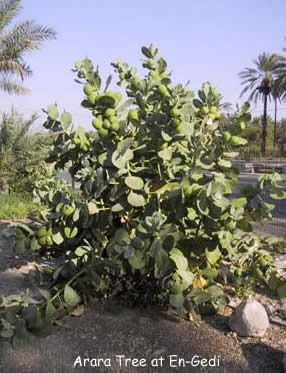
We came to a tree that fit that image perfectly while nearing the end of a trip to Israel a few years back. The tree I’m referring to is in the picture to the right. It was just outside the nature preserve of the En-Gedi springs, a beautiful oasis in the middle of the Judean wilderness, near the barren salt flats that surround the Dead Sea.

The remarkable thing about this beautiful tree is that it is actually the cursed tree that Jeremiah spoke about in this proverb. According to Nogah Hareuveni, an expert on plants of the Bible, in Hebrew the name of this tree is called the Arar, which sounds similar to the word for cursed, arur, and is part of a wordplay which is central to this poem.

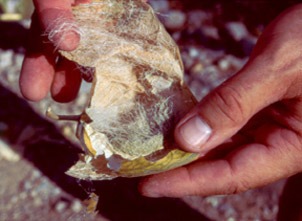
Arara - cursed fruitWhy is it called “cursed”? Because if a thirsty, hot traveler approaches the tree and picks a nice big fruit, he will find a nasty surprise. When opened, the fruit makes a “pssst” sound, and is hollow and filled with webs and dust and a dry pit.

The Bedouin call this tree the “Cursed Lemon” or “Sodom Apple” because it grows in the salt lands that surround the Dead Sea where Sodom and Gomorrah once were. According to their legends, when God destroyed Sodom, He cursed the fruit of this tree also.
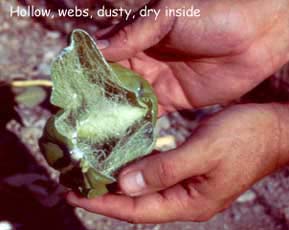
I first heard about this tree from Ray Vander Laan, and I was captivated by the imagery both of the tree itself and what Jeremiah says about it in the poem. From studying Hebrew and being in Israel, I’ve seen even more depth of imagery in this poem. Here are some of my thoughts about it:

In Hebrew, the future tense is used in proverbs to indicate an indefinite length of time. So in Hebrew, it sounds like you say, “A stitch in time will save nine.” If, then, you assume that the future tense of the Jeremiah passage is more of the proverbial sense that we have in English, this is what it sounds like:

Cursed is the man who trusts in mankind and makes flesh his strength, whose heart turns away from the Lord. He is like a bush in the desert, which does not see when prosperity comes, but lives in stony wastes in the wilderness, a land of salt without inhabitant. (Jeremiah 17:5)

(But) blessed is the man who trusts in the Lord, whose confidence is in Him. For he is like a tree planted by the water, that extends its roots by a stream. It doesn’t fear when the heat comes, but its leaves are green, and it is not anxious in a year of drought, and doesn’t cease to yield fruit. (Jeremiah 17:7) 

Once I started reading the poem this way, I saw it very differently. I used to think that the cursing was done by God, in order to punish a person for not trusting. Now, I see this as the natural consequences of action, and see it in my own life. When I assume that my strength comes from myself, I am filled with worry all the time. Even when times are good I can’t see the prosperity around me! All my circumstances seem negative, like a barren wasteland; and I feel lonely and weary even when friends and family are nearby.
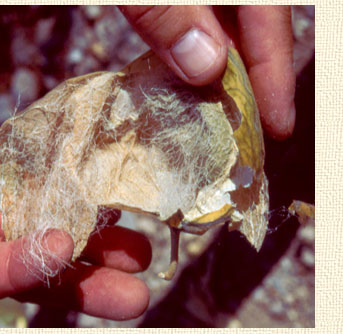
Arara cursed fruitOn the other hand, when I put my trust in God, I can live with relatively little anxiety even in the worst times. One couple I know had a house fire that destroyed all of their possessions while they were away from home. The insurance adjuster couldn’t understand why they were calm and collected, but it was because they saw that God had saved their family and was obviously taking care of them through it. They simply weren’t experiencing the drought the way they would have if they didn’t see God’s hand surrounding them.

One interesting contrast is that in the literal Hebrew, the cursed person “doesn’t see the coming of good” while the blessed person “doesn’t fear the coming of heat.” At first I thought it was odd that heat is considered a negative, but when my thermometer peaked at 120 degrees while at En-Gedi, I understood.

In Israel, everything is dry and dead in the summertime because of the heat, and the winter is the time of growing crops. Israelis tend to look at summer in the way that Westerners look at winter — a difficult and depressing time that comes every year. They also have a special blessing to praise God every time it rains, which gives life to their land. Think about that next time you complain about a rainy day.

Another image that I got from this poem is that in some sense, the tree actually chooses where it is going to live. Does it choose to live by the river, or does it choose to live in the barren wasteland? Ironically, this Arara tree was within sight distance of both the lush oasis of En-Gedi and the amazingly barren Dead Sea. It seems to be symbolic of my own life which goes back and forth between an excited faith in God, and depressing cynicism about what the future may hold. I seem to choose my location day by day.

Finally, from looking at the cursed tree, what really is wrong with it? Essentially, it can grow tall and get leafy, but the big problem is that the fruit has no juice. In essence, the tree is supposed to absorb life-giving water from the soil and pass it on to others through its fruit, but this is not happening. It is as if the tree has cut itself off from the source of living water by relying on its own strength. It looks fine from the outside, but yields empty fruit.

In some sense, the juice is the maim chaim, “living water,” of the Holy Spirit, which Jesus says will pour out of the one who believes in him (John 7:38). The “juice” comes from having a life that is filled with the refreshing presence of the Lord, and without that, our lives are empty and hollow.
God is Our Refuge

by Bruce Okkema

In you, O LORD, I have taken refuge; let me never be put to shame. Rescue me and deliver me in your righteousness; turn your ear to me and save me. Be my rock of refuge, to which I can always go; give the command to save me, for you are my rock and my fortress. Psalm 71:1-3

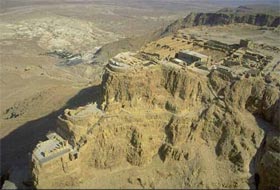
MasadaMasada stands as a huge outcropping of rock jutting 1,440 feet above the desert floor on the western shore of the Dead Sea. It is located fourteen miles north of the southern end of the sea and eleven miles south of En-gedi. Masada remains today one of the Jewish people’s greatest symbols, and except for Jerusalem, it is the most popular destination of people visiting Israel.

Its history as a desert fortress goes back far into the past. David moved throughout this region of the southern Judean desert as he was hiding from Saul, and quite likely spent time on this mountain. Although Masada is not mentioned by name in the Bible, we see glimpses of it in several places where God is called a “rock of refuge,” or “my fortress.” Metzudah means “refuge” or “fortress” in Hebrew. (In addition to our text above, see also 1 Sam 22:4-5, 23:14, 24:22, and Psalms 18:2, 31, and 144:2.)

The remains that we we see today are from the time of Herod, who not only increased the fortifications, but built magnificent garden palaces on either end of the mountain. It almost never rains here, yet Herod built an elaborate water system to divert water that originated in the Judean mountains into cisterns at Masada. Servants carried water from there to upper reservoirs servicing the palaces, to an Olympic size swimming pool!

The reason Masada is one of the Jewish people’s greatest symbols is for what occurred there during the Jewish revolt against Rome during 66 – 72AD. A group of Zealots took Masada and it became a place of refuge for other Jews fleeing the Roman terrorism. For three years they were able to fend off the Romans and worship the Living God while enduring the rigors of desert life. Finally, faced with certain capture and torture, the group of 960 chose to take their own lives, rather than become slaves of Rome. “The valor of the Jewish zealots residing on Masada during the Roman siege is celebrated as the supreme example of self-sacrifice for the preservation of the nation of Israel. Today, when the recruits of the Israel Armored Corps take their oath of allegiance, they do so on Masada to remind each generation of the price their forefathers paid for their nation. They cry: “Masada shall not fall again!” (1)

Masada

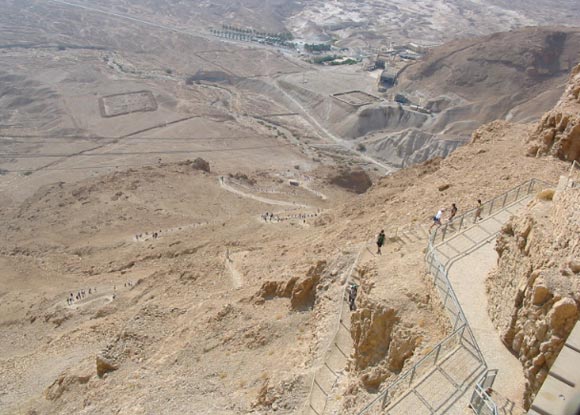
A view of the snake path from the top of Masada

To climb the arduous snake path in the 120° sun, to imagine looking down helplessly from above on your fellow countrymen enslaved to build a siege ramp against you, to stand at the precipice thinking across history about all the many who have served the Lord at the cost of their lives is to wonder if I will have the courage to stand that test for my Lord one day.

Therefore, you kings, be wise; be warned, you rulers of the earth. Serve the LORD with fear and rejoice with trembling. Kiss the Son, lest he be angry and you be destroyed in your way, for his wrath can flare up in a moment. Blessed are all who take refuge in him. Psalm 2:10-12.


Additional sources for this article:
(1) http://www.ancientsandals.com/overviews/masada.htm
http://www.jewishvirtuallibrary.org/jsource/Judaism/masada.html
Josephus Flavius, Jewish Wars, Chapter 8 http://www.templebuilders.com

Mighty One of Israel

by Scott Leys

“I am Yahweh your God, who brought you out of the land of Egypt, out of the house of bondage.” Exodus 20:2 (World English Bible)

The Hebrew language is a language short on vocabulary. Often times a single Hebrew word can have many nuances of meaning depending on suffixes, prefixes, and context. One word may serve to convey many different ideas or word pictures, making for a very poetic, but not a very concise language. There is one glaring exception to this rule though.

Have you ever stopped to consider what our Heavenly Father means when He identifies Himself as our God? In the passage above, the Hebrew word translated as God is Elohim. To the Hebrews it carried the connotation of Yahweh as the creator of all things. Interestingly there are several other Hebrew words that have been translated as God in our English versions of the Bible. So while the Hebrew language as a rule is word poor, the writers of the Hebrew Scriptures under the inspiration of the Holy Spirit, were very specific in assigning attributes to the Almighty.

Other Hebrew words translated as God include: El(identifying Yahweh in all His power and magnificence); Eloah(identifying Him as the mighty one to be worshiped, contrasted with false gods); Elyon(usually translated Most High God – identifying Him as the possessor of heaven and earth); and El Shaddai(usually translated as God Almighty – identifying Him as our nourisher and all bountiful giver).

What significance does this have for us? Our Father intended for us to know Him in a very personal and intimate way. He shows Himself to us by letting us in on these different personality traits. He wants us to understand every aspect of who He is and what He does for us. Many of us have a personal relationship with our Savior Yeshua, but we sometimes fail to realize Yahweh revealed Himself to His creation from the very beginning in this same personal way.

The next time you come across God in the Old Testament, pull out a concordance and look up the Hebrew word. You might be surprised at the treasure you find.

Amen and Amen!

by Lois Tverberg

Blessed be the LORD, the God of Israel, from everlasting even to everlasting. And let all the people say, “Amen.” Psalms 106:48

It is interesting to note that the most widely known word on all the earth, across the most languages, is the word “Amen,” a Hebrew word. Jews, Christians and Muslims all use this word in prayer, and it generally moves unchanged from language to language. Even in the Greek of the New Testament, the word was written literally as “amen” rather than a Greek translation being used.

The word “amen” is related to the Hebrew words emunah (faith, belief, trust) and emet (truth). It means something like, “This I affirm,” or “Let it be so.” It was used throughout the Old Testament as a response, as when blessings or curses were read as part of a covenant, and all the people said “Amen.” When psalms were sung, the people would respond, “Amen.” The leader didn’t say it – it was a way of the people to proclaim their agreement with the liturgy they heard. (See today’s verse.) In Jewish prayer today, this is still done. After the leader recites the prayer, the audience follows with “Amen,” in effect saying, “I affirm this prayer also, let it be so for me too.”

Some scholars believe that there has been confusion in our understanding of Jesus’ use of “amen.” He often began speaking with an “amen,” which has been thought to be a way to emphasize his own words. In the King James, it is translated “verily” and modern translations remove it altogether, and substitute “I tell you the truth.”

Robert Lindsay, a scholar of the first century Jewish context of Jesus, believes that Jesus actually used “amen” as it was used by the rest of his society – as a response of affirmation of something else that precedes his words. For instance, when the centurion tells him that by just saying the word, Jesus can heal from afar, Jesus says, “Amen! I tell you, I have not seen such great faith in Israel.” (Matthew 8:10) The beginning “amen” is an exclamation of enthusiasm in reaction to hearing the man’s statement of faith. Jesus responded to the people and situations around him with a loud “amen” sometimes, and didn’t just underline his own teachings with that word.

“Amen” isn’t just the natural end of a prayer, it is a way of saying “I most certainly agree!” Whether we say it at the end of our own prayers, or use it to agree with the prayer of another, may all our prayers reflect this wholehearted agreement with the words we have prayed, and our response of faith to God’s answers.

Photo by Steve Harvey on Unsplash

Even This is For the Good

by Lois Tverberg

“I will bless the LORD at all times; His praise shall continually be in my mouth. ” Psalms 34:1

One of the ways the rabbis interpreted the phrase “love the Lord your God with all of your heart” was to point out that since we have both joy and sadness in our heart, we need to love God both when we are happy and when we are sad. We are to bless the Lord at all times, as the psalmist says we should do today. As Paul points out, we should “give thanks in all circumstances, for this is God’s will for you in Christ Jesus.” (1 Thessalonians 5:18).

The rabbis had some wonderfully wise prayers in order to bless the Lord for both the highs and lows in life. When they went through a long, difficult time and finally had relief, or celebrated some happy event for which they waited, they said, “Blessed is He who has allowed us to live, and sustained us, and enabled us to reach this day!”

When a son returned home from war, or when a baby was born, or some other wonderful thing, they stopped to praise God for bringing them to that point in their lives. Even today this prayer is used, and is a favorite for many.

Even in times of grief, when someone died or they heard tragic news, they blessed God. They said “Blessed is he who is the true judge.” It was a proclamation that God is righteous and good even in the midst of terrible times, and it reminded them that he will in the end bring justice, even when it doesn’t seem to be present at the time.

They have an interesting, wise, but difficult saying that is often said on hearing tragic news. Gam zo le tovah – “Even this is for the good.” The first time I heard this saying was from a dear friend in Israel who had learned that his wife had breast cancer. If you’ve never lived through difficult times, it’s not appropriate to quote this line as an empty platitude to someone who is. But from the lips of my good friends who were anxious and in grief, it was a statement of great faith in God — that even in the worst times, we know that a loving God intends it for good.
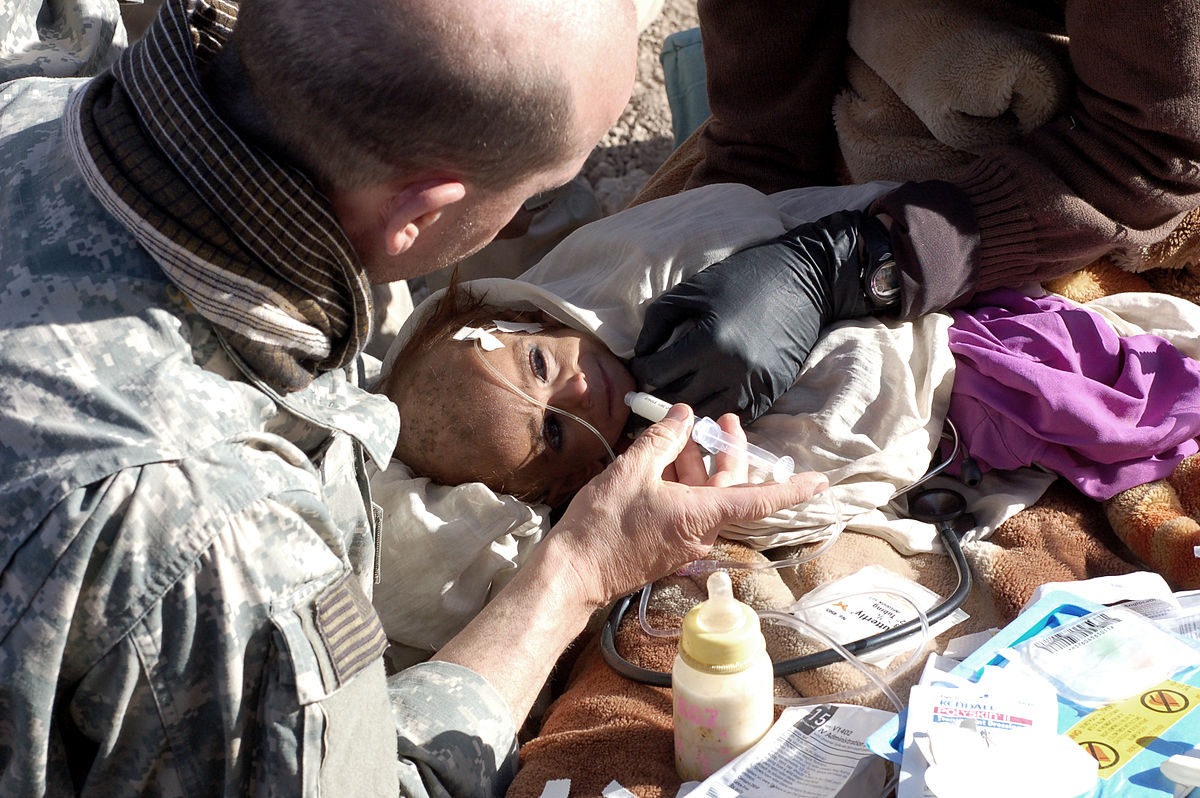


Photo by Anton Levin on Unsplash

In All Circumstances

Child Crying

by Lois Tverberg

Give thanks in all circumstances, for this is God’s will for you in Christ Jesus. (1 Thessalonians 5:18)

In difficult times it is hard to see what God is doing, and we worry that he has lost control of the world or doesn’t care about us. The rabbis had an interesting, wise, but difficult saying that is often said on hearing tragic news:

Gam zo le tovah – Even this is for the good.

Child CryingThe first time I heard it was from a dear friend in Israel when he had found out that his wife had breast cancer. It is never appropriate as an unsympathetic platitude, but from the lips of a person who is suffering, it is a statement of great faith in God — that even in the worst times, we know that a loving God intends it for good.
Paul said that we should give thanks in all circumstances (1 Thessalonians 5:18). Other rabbis said something similar, that we are to “love the Lord your God with all of your heart,” and sometimes our hearts are full of joy, but sometimes full of sadness. To love him with all of our heart, we need to love him both in happiness and sadness. We are to bless the Lord at all times, as in Psalm 34:1: “I will bless the LORD at all times; his praise shall continually be in my mouth.”

Because of this, there is a traditional Jewish prayer for times of grief, when someone dies or when tragic news is heard. It is, “Barukh diyan emet” which means, “Blessed is he who is the true judge” or, “Blessed is he who is truly just.” It is a reminder that God is still good, even in tragedy, and that he will ultimately bring justice where justice doesn’t seem to be present. It also reminds us of God’s sovereignty and his control over all things.

We as Christians have a special reason to know that God is not unconcerned about our difficulties. We know that he has walked on earth as we have, and he has suffered as we do. He was acquainted with grief and familiar with sorrow and pain.

If our difficulties don’t come from our own mistakes, they come from painful circumstances beyond our control. Almost never do we choose them. Christ’ pain, in contrast, was entirely of his own choosing. He willingly took on great hardship and suffering for us, out of the great depths of his love.


Photo: franciso_osorio

Saving a Whole World

by Lois Tverberg

“And He said to them, ‘Is it lawful to do good or to do
harm on the Sabbath, to save a life or to kill?'” Mark 3:4

When Jesus defended his actions about healing on the Sabbath, he used the Jewish legal concept of pikuach nephesh, which literally means “preserving life,” a supreme value to rabbis of his time. The idea was that human life is extremely precious, and that every other law can and must be set aside to save a life. Even though the Sabbath laws were very strict, any one of them could be broken if a life was at stake. There was some debate about what circumstances were considered “life-threatening,” and Jesus was taking part in a discussion about whether improving a person’s life by healing them was considered pikuach nephesh.

Man caring for childThe idea that saving a life is a supreme value may seem second nature to us, but it was without precedent in other ancient cultures. In other lands, many minor crimes were punishable by death, but not in Israel. God had made it clear that since humans were made in his image, we are precious to him. We don’t often contemplate how this singular idea has transformed our entire civilization to the point that it is what makes us “civilized.” Hospitals, orphanages, and charities of all types have arisen our of the belief that human life must be preserved at any cost.

Jews have a profound way of expressing the idea of the preciousness of life that comes from the first case of shedding of innocent blood, Cain’s murder of Abel. God said to Cain,

“The voice of your brother’s blood (bloods, literally) is crying to Me from the ground.” (Gen. 4:10)

The Hebrew word for blood is dam, and the plural is damim. When the Bible talks about murder, or “bloodguilt,” it uses the plural form, damim. Using the logic that the blood contains the life of a person, to speak of blood in the plural implies that a murder doesn’t just take the life of one person, it takes the lives of many. Jews therefore have a tradition that the voice of the “bloods” crying out from the ground was actually the voices of all of the future descendants of Abel that would have ever lived. From this they have a saying, “To take the life of one person is like taking the life of a whole world, and to save the life of one person is like saving a whole world!”


Photo: John Severns

A Light to My Path

Your word is a lamp to my feet and a light for my path. Psalm 119:105

What does it mean that God’s Word is a light to ones’ path? Imagine what this metaphor would mean if you were traveling in Israel’s rocky, mountainous terrain.

Its narrow, rocky paths are tricky even in the day time. At night they become absolutely treacherous. It is an utter necessity to have an lamp to light the way, to avoid twisting an ankle or losing one’s footing and crashing down a hill.

A poignant Hasidic story expands on this metaphor:

A man was walking through a forest one night without a light, alone and afraid. He stumbled along slowly, straining to find the winding path, tripping over branches and rocks all the while. Then he encountered another man with a bright lantern on the path. Together they walked easily and quickly together until they came to a crossroads.

They bade each other farewell and went their separate ways. Then the man without the light went back to groping and stumbling down the path, while the man with the lamp receded into the distance, moving forward smoothly, with no trouble.

The point of the story is to teach us that everyone must have his or her own knowledge of God’s word to guide them, which is achieved through personal study and effort to know the Scriptures. We can’t be lazy and let our pastor, wife, husband or friends be the ones who learn while we can’t be bothered.

The difference is between worrying and stumbling through each situation, or walking surefooted by God’s word, as a compass that points towards his will.


(1) A Hasidic story relayed in Old Testament Words: Reflections for Preaching, by Mary Donovan Turner, Chalice Press, 2003, p. 8. The Jewish Hasidism (hah-SEED-ism) movement arose in Poland in the 18th century. See this article for more.

Photos: Roman PoberezhnikJulia Florczak

Beautifying God’s Commands

by Lois Tverberg

“The LORD is my strength and my song; he has become my salvation. He is my God, and I will praise him, my father’s God, and I will exalt him.” Exodus 15:2

The line above is part of the song that Moses and the Israelites sang after God parted the Red Sea and miraculously saved them from Pharaoh’s armies, one of the most joyous moments in their history.

Rabbinic thinkers meditated on the words “I will exalt him,” and asked the question, “How can mere mortals hope to exalt God, the Creator of the entire universe?” Their answer was that they could exalt him by doing his will in the absolute best and beautiful way possible. They called this hiddur mitzvah, meaning to exalt (or beautify) God’s commands.

Christians may be surprised that the word mitzvah, meaning commandment, is positive rather than negative in Jewish culture. We think of commandments as burdensome regulations, but the usual Jewish usage of mitzvah is that it is an opportunity to do something good that God told you to do. Jewish people say things like, “I had a chance to do a mitzvah today when the elderly woman asked for my help.” Or, “It’s a mitzvah to celebrate Passover with a lovely dinner with family and friends.” The word is always used in a positive way, suggesting that doing what God has asked is a joy and a spiritual opportunity, not a burden.1

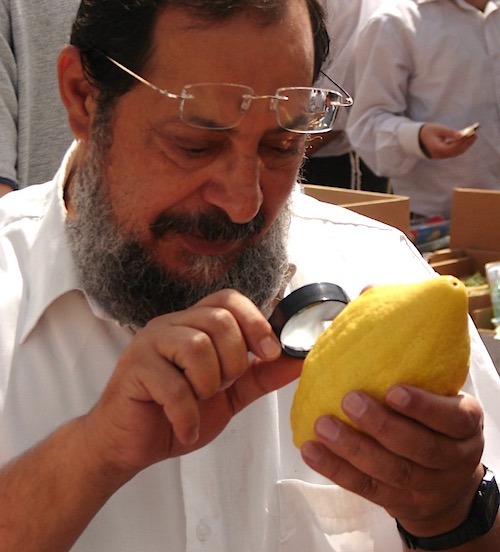
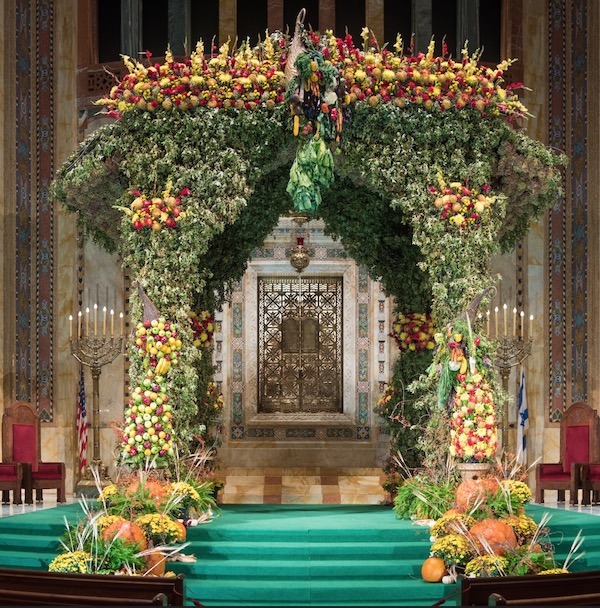
Inspecting an EtrogThe idea of hiddur mitzvah (beautifying the command) says that if God tells us to do something, we shouldn’t just do the minimum, but to perform it in the best way possible, sparing no expense or trouble. Since God told Israel to build booths for the Feast of Sukkot, when a Jewish family decorates their sukkah (booth) skillfully and elaborately, they “beautify the command.”

When one poor Jewish man was asked why he spent $50 for a citron, a lemon-like fruit required for Sukkot, he replied, “Why would we worship God with anything less than the very best?” Spending sacrificially on doing God’s will is a way of showing great love for God. 2

In Jesus’ parable about the Good Samaritan, it sounds like the Samaritan went far beyond the minimum to care for the wounded man by the road, a kind of hiddur mitzvah. The Samaritan man obeyed God’s command to love his neighbor by personally caring for the injured traveler, carrying him to the inn on his own donkey, and investing a large sum of his own money to care for him. Because he was a Samaritan he was even risking his own life, because as an enemy of the Jews, he could have been accused of being the attacker. (Luke 10:33-35)

If we are grateful that Christ has died for our sins to bring us into relationship with God, we should serve him as well as we possibly can too. As Paul said,

Whatever you do, work at it with all your heart, as working for the Lord, not for men, since you know that you will receive an inheritance from the Lord as a reward. It is the Lord Christ you are serving. Colossians 3:23-24


See more at these links: Hiddur Mitzvah: The Case for Beautiful Ritual Objects and Hiddur Mitzvah: What a Beautiful Mitzvah.

Photos: Wikipedia – Etrog, Sukkah