
True Knowledge of the LORD

by Lois Tverberg

“For the earth will be filled with the knowledge of the LORD, as the waters cover the sea.” (Isaiah 11:9 NIV; also Habakkuk 2:14)

The Bible often talks about having the “knowledge of the Lord,” and we may wonder what knowledge God desires of us. Does this really refer to a perfect doctrinal understanding of the godhead? How much theological expertise do we need?

We as Christians often focus on knowledge by defining ourselves in terms of our creeds. Yet as much emphasis as we place on knowledge, we know that information alone is not God’s ultimate goal.

Paul points out that “knowledge puffs up, but love builds up” (1 Cor. 8:1). James points out that even demons know the truth about God, and it makes them shudder (James 2:19). Indeed, Satan could probably give correct answers to some of the world’s most difficult theological questions, perhaps more than any other created being, but he does not have a saving knowledge of Christ.

Indeed, sometimes our desire to “know” can lead us into problems. We can do damage by trying to know what really can’t be known. We’ve all heard of people going through great difficulties who are hurt by others who claim to “know” why their prayers aren’t being answered. Such people discourage their hurting friends by falsely accusing them of sin or lack of faith, as Job’s friends did.

God doesn’t require that we have all the answers about why he acts as he does. It is interesting that Job expressed his anger with God and his confusion about why he permitted all sorts of evil on earth, and God declared that Job spoke “truthfully.” On the other hand, God was quite angry with Job’s friends whose cold-hearted theology had all the answers worked out. Although Job’s friends were trying their best to be theologically correct, they did not know the mind of God:

The LORD said to Eliphaz the Temanite, “My wrath is kindled against you and against your two friends, because you have not spoken of Me what is right as My servant Job has. (Job 42:7, NASB)

From Job’s case, it seems that sometimes our honest questions are more truthful in God’s eyes than a claim to have all the answers.1

We also see that our desire to read the mind of God can undermine what he has revealed in his word. For instance, people ponder God’s control over the future and sometimes conclude that if God foresees all and is unchangeable, there is no reason to pray. As a result, they can become fatalists and give up. However, the clear words of Jesus are that we should always pray and never give up (Luke 18:1)! Our own logic may lead us to a wrong conclusion. We are wiser to admit that we cannot know the depths of God’s mind, and conclude that if Jesus tells us to pray, our prayers are worthwhile and effective.

A Rabbinic Observation about Knowledge

The rabbis had some wisdom on this issue. They asked the question, “Why do the Scriptures begin with the second letter of the alphabet rather than the first?”2 (In Hebrew the first word of Genesis is breisheet, which starts with the Hebrew letter bet, which is the second letter, after aleph.) Their insightful answer was, “To show that the Scriptures do not answer every question, and not all knowledge is accessible to man, but some is reserved for God himself.”

They also pointed out that the letter bet is closed on the right side but open on the left. Since Hebrew is read from right to left, it appeared to them that the Scriptures start with a letter that is open in the direction of the reading, but closed toward the beginning of the text. It’s as if there is a one-way sign saying that we need to start here and move forward through the Scriptures.

The point of this midrash, “interpretive story,” is not to discourage study and inquiry, but to note that God has chosen to allow some things to remain a mystery to man. Even in the very first sentence of the Bible, there is no attempt to answer the question of where God himself came from. Pagan creation accounts always began with stories about how the gods themselves came into existence, feeling the need to address that question. God in his majesty does not give every answer, just as he did not give Job every answer for the questions he asked.

Greek intellectualism has influenced our thinking, and it tends to lead Christians to believe that we are capable of understanding anything we might ask God: but just as Moses could not see all of God’s glory and live, so too would we be overwhelmed by the enormity of God’s thoughts. We forget that whole libraries have been written to describe the workings of just one cell of the human body, and that God designed everything from electrons to galaxies. We are just specks in the vast ocean of God’s intellect. We need to realize the wisdom in being able to humbly say, “I don’t know” and letting God alone know some things.

A Hebraic Insight on Knowledge

If we look at the idea of “knowledge” as it is understood in Hebrew, we can have a better understanding of the knowledge that God desires of us. When English speakers use the verb “to know,” we think of our mental grasp of facts. In Hebrew, however, the word for “to know,” yadah, is much broader in scope.

Rather than just knowing information, the Hebrew idea of yadah stresses knowing from experience and relationship, and acting on that knowledge.3 When used in terms of knowing people, it can mean caring for someone, or even mean being intimate sexually. For instance, the very literal King James Version reads:

And Adam knew (yadah) Eve his wife; and she conceived, and bare Cain.
(Genesis 4:1, KJV)

This idea is especially important when we learn about the biblical concept called the “knowledge of God,” da’at elohim. We as Westerners may think this means to prove God’s existence and establish a theological model to explain God’s nature. But the Hebrew view is that “knowledge of God” is having a life in relationship with him. We can see this way of thinking when we compare Christian translations of the Bible with a Jewish translation. The New International Version has:

The Spirit of the LORD will rest on him — the Spirit of wisdom and of understanding, the Spirit of counsel and of power, the Spirit of knowledge and of the fear of the LORD. ” (Isaiah 11:2)

But the Tanakh by the Jewish Publication Society reads:

The spirit of the LORD shall alight upon him: a spirit of wisdom and insight, a spirit of counsel and valor, a spirit of devotion and reverence for the LORD.” (Isaiah 11:2, JPS)

Hebraically, knowledge is not just knowing who someone is, it is devotion to them as well. Jews see knowledge of God as intimacy with God, knowing him as a son does his father, and as a wife her husband. We should think of that when we share our faith. Are we trying to fill people’s minds with facts, or are we bringing people to know the Lord personally? How well do we know him ourselves?

In this context, we can understand the Jewish idea that “study is the highest form of worship”; as Abraham Heschel said, while Greeks (Europeans and Americans) study to comprehend, Jews study to revere.4 When we study God’s word in order to know him intimately and do his will, we are truly honoring God as our Father and Lord, whereas when we study just to fill our brains to become more respected, or to set others straight on what we disagree with them about, it is knowledge that has little use but to make us arrogant.

In the ministry of En-Gedi, we have struggled with how to communicate that our ministry is educational, but devotional in nature; that we want to bring people closer to the Lord by understanding the Bible in its context.

A verse we felt the Lord had given us was: “For the earth will be filled with the knowledge of the LORD, as the waters cover the sea” (Isaiah 11:9 NIV; also Habakkuk 2:14). We had pondered the verse for years, looking for insight that it would give us into our calling. When we read it in the Jewish translation, we finally understood it better. It says that the earth “shall be filled with devotion to the LORD as water covers the sea” (Isaiah 11:9, JPS).

~~~~

This article was based on two chapters of Listening to the Language of the Bible, available in the En-Gedi bookstore

1 Dickenson, A. The Gospel According to Moses: What my Jewish friends taught me about Jesus (Grand Rapids, MI: Brazos Press / Baker Book House, 2003) has a wonderful discussion on bringing our doubts to God, and on dealing with paradoxes: see pp.15-28 and 63-80.
2 Lieber, D. L. Etz Hayim Torah and Commentary (New York: Jewish Publication Society, 2001), p. 3.
3 Wilson, M. R, Our Father Abraham: The Jewish Roots of the Christian Faith (Grand Rapids, MI: Eerdmans, 1989), pp. 287-289. Wilson’s chapter on “The Contour of Hebrew Thought,” especially the idea of “block logic” (pp. 150-153) is also extremely helpful in understanding the way the Bible “thinks.”
4 See the En-Gedi article “Does God Want Us to Fear Him?

Photos: Iñaki del Olmo on UnsplashIlya Repin [Public domain], Priscilla Du Preez on Unsplash

Time to Pray

by Bruce Okkema

But the news about Him was spreading even farther, and large crowds were gathering to hear Him and to be healed of their sicknesses. But Jesus Himself would often slip away to the wilderness and pray.” Luke 5:15-16

“It was at this time that He went off to the mountain to pray, and He spent the whole night in prayer to God.” Luke 6:12

When I examine my life as to whether I am spending enough time in prayer, I have yet to be able to say that I am. Even when I devote a lot of time to this, it seems I can always do more. Is this true for you as well?

Jesus spent a lot of time in prayer everyday as we read in many accounts throughout the gospels. As a faithful Jewish man, he would have prayed the full Shema1 twice every day, as well as the “Amidah” or “18 Benedictions”2 at the very least. If you try this yourself, you might be surprised at how long it takes, but you will begin to realize why this was done.

Perhaps you do want to pray more, but you just can’t think of any new ways to make your prayer life deeper. You are not alone, there are many people who feel this way and as long as you make a commitment to do something about it, you can be encouraged that there are many places to turn for help.

The best place to start, is to pray specifically for God’s help in improving your prayer life. It is almost certain you will get a positive answer; can you imagine that the Lord would not help you in this? You can also begin using scripture as a guide for your prayers. Study some of the great prayers of Abraham, Moses, David, Elijah, Isaiah, Jesus, Paul, Peter … praying them for yourself. Also, look at any Christian bookstore and you will find many books on prayer with good ideas about where to start and suggestions on methods to use.

Of course the difference is not made by the quantity of time you spend in prayer or about a particular method you use, but rather your sincerity in doing it. Try to follow Jesus’ example of praying often and praying long. You will find that that more time you spend in prayer, the more time you will want to spend in prayer.


(1) See the English Translation of the text of the full Shema
(2) ”The Amidah Prayer: A New Translation” by David Bivin
Salvation with Fear

by Lois Tverberg

Therefore, my dear friends, as you have always obeyed – not only in my presence, but now much more in my absence – continue to work out your salvation with fear and trembling, for it is God who works in you to will and to act according to his good purpose. Philippians 2:12-13

The sentence above from Paul’s letter catches many Christians off guard. It appears to say that we should be in perpetual worry about our salvation, and that salvation is something to be earned. Yet, we are taught throughout scripture that salvation comes through faith in God. Two Hebraic concepts that Paul might have had in mind may shed some light on this verse:

First, in Hebraic understanding, salvation begins during our lives, it is not just something after death. Someone who is not saved is estranged from the family of God — wandering from the flock — “lost.” Salvation comes through restoring a relationship with God the Father by believing in the atoning work of his Son; it is to be rescued from a life separated from God.

Reverent FigureIt is true that there are many places where the scriptures speak of salvation in the future, in terms of being saved from judgment. But it began the moment we repented and believed in Christ. As Paul says, “By grace you have been saved…” (Ephesians 2:5, 8), using the past tense, not the future tense. In that sense, our salvation has already happened, and we are new creatures!

The second concept in the background of Paul’s saying is the concept of “the fear of the Lord” (yir’at adonai). This is an often-used phrase of the scriptures which means an awe and reverence of God that causes us to want to do his will. It does mean to respect God, who will discipline those whom he loves (Revelation 3:19). But the emphasis is on a positive, respectful relationship with God, not in terms of being terrified by him.

If having a “fear” of the Lord causes us to live with integrity and wisdom about God’s ways, it will ultimately transform us. Paul was using the word “fear” in this sense — having awe and respect for the Lord. He is exhorting us to live new (eternal) lives in obedient relationship with God, so that we can see him working out his plans to redeem every aspect of our lives. We may be looking forward to a future in heaven, but we should be enjoying the richness of our relationship with the Lord on this earth as well.


See also the Director’s Article, “Does God Want Us to Fear Him?”. Also useful is Listening to the Language of the Bible, En-Gedi Resource Center, 2004, pp. 7-8. The book contains many other word & culture study articles like this one.

Photo: United States Coast Guard

Wisdom for Good Years

by Lois Tverberg

Behold, seven years of great abundance are coming in all the land of Egypt; and after them seven years of famine will come, and all the abundance will be forgotten in the land of Egypt, and the famine will ravage the land. Let Pharaoh exact a fifth of the produce of the land of Egypt in the seven years of abundance. Let the food become as a reserve for the land for the seven years of famine which will occur in the land of Egypt, so that the land will not perish during the famine.
– Genesis 41:29-30, 34, 36

When God told Pharaoh through his dreams that there would be seven years of record crops followed by seven years of famine, he was giving him an enormous gift of insight into the future. With that warning, he was able to save the lives of his countrymen, as well as those in the surrounding region.

Wisdom in good YearsIn the past few years, many of us wished that God would have given us Pharoah’s dreams of warning about the future. In the late 1990’s the U.S. experienced a business boom and record stock highs, but since 2001, especially after September 11, we have experienced a severe recession that still is with us. Many of us lost retirement savings in the stock market, or lost a job or had a businesses fail. Wouldn’t it have been wonderful if God would have warned us ahead of time? We can see the great wisdom that Joseph gave Pharoah about saving from the coming abundance for times of hardship. In these past years, many of us have re-learned this lesson, and now make our decisions with money based on an assumption that times may change for the worse.

Wisdom for good yearsWhile most know the truth of this economically, we should also think about this idea of “storing up a harvest” in times of abundance in other ways. We also should consider our relationships and our faith in God. Do we realize that our children will grow up and leave home, our friends may move away, and our parents will die someday? Do we know that it is almost inevitable that we will go through times of discouragement and a struggle for faith?
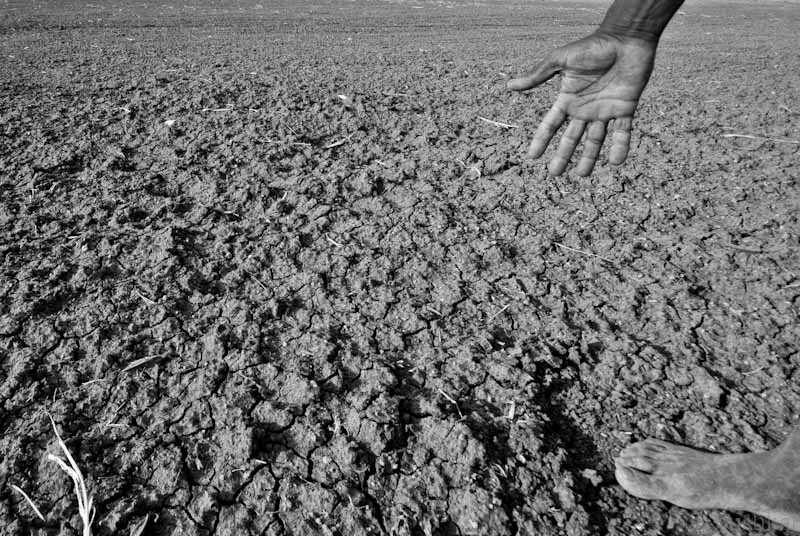
When we think ahead toward these potential hard times, it reminds us not to neglect to “store up” what we will need to be sustained when the need doesn’t seem so pressing. We need to grow relationships in our family and friends that can weather both good times and bad. And we need to grow our roots of faith in God deep enough so that they can sustain us in dry times too. Soon or later the dry times will come, and it is only what we have stored up that will sustain us then.


Photo: Pushkarv and Stephen Morrison/AusAID