The Fragrance of Christ

bannerMary then took a pound of very costly perfume of pure nard, and anointed the feet of Jesus and wiped his feet with her hair; and the house was filled with the fragrance of the perfume. (John 12:3)


In Matthew 26 we read the story of Jesus being anointed by Mary with very expensive perfume. Most Christians focus on the story of the anointing as pointing towards Christ’s death at the end of the week, because of Jesus’ comment that she did it to prepare for the day of his burial (Matt 26:12).

Another thing was likely going on, however, that would have been obvious to the disciples, so obvious that Jesus didn’t even need to mention it. While fragrant oils were used on the dead, they were also used to anoint kings. Mary’s extravagant, worshipful action was quite likely intended as her own personal declaration of Jesus as the “Anointed One,” the mashiach in Hebrew, or christos in Greek.

Usually, the ceremony of anointment was reserved only for sacred objects in the Temple and for anointing priests and kings, to show that they had been chosen by God. Instead of being crowned during a coronation, kings were anointed with sacred oil that was perfumed with extremely expensive spices, making it like diamonds in terms of its preciousness. The fragrant, flowing oil was like an invisible crown that conferred an aura of holiness. Everything that had that unique scent would be known to all as God’s special possession. 

After their initial anointing, kings would anoint themselves with other precious scented oils for special occasions. We read that both king David and Solomon did this:

(From a psalm for King David) You have loved righteousness and hated wickedness; Therefore God, Your God, has anointed You With the oil of joy above Your fellows. All Your garments are fragrant with myrrh and aloes and cassia. (Ps. 45:7-8)

What is this coming up from the wilderness like columns of smoke, perfumed with myrrh and frankincense, with all scented powders of the merchant? Behold, it is the traveling couch of Solomon; sixty mighty men around it, of the mighty men of Israel. (Song of Solomon 3:6-7)


In ancient times, the majesty of a king would be obvious to those around him, not only because of the jewels and robes that he wore, but by the scent of extremely expensive oils that were poured on him. These royal figures would parade through the streets with the fragrance of the oils, telling all of the bystanders a king was passing by. We see this after the anointing of Solomon, who is placed on a donkey and parades through the streets of Jerusalem, while people stand by and cheer:

So Zadok the priest… went down and had Solomon ride on King David’s mule, and brought him to Gihon. Zadok the priest then took the horn of oil from the tent and anointed Solomon. Then they blew the trumpet, and all the people said, “Long live King Solomon!” All the people went up after him, and the people were playing on flutes and rejoicing with great joy, so that the earth shook at their noise. (1Kings 1:38-40)

As much as anointing portrayed a person as being set apart by God for a purpose, the ultimate “Anointed One,” that everyone hoped for was the Messiah, the Christ, the King of Kings who God would someday send to reign over the earth.

Mary’s action was not an “official” anointing, but an expression of her own extravagant, worshipful love of Jesus. She knew that he was the one that God had chosen to redeem the world and reign over it as Messiah and Lord.

I wonder if Jesus’ comment about her preparing him for his burial is somewhat ironic, because she intended to glorify him, but he saw her action as pointing toward his suffering and death. Indeed, it was through that death that he was glorified! But I’m not sure that Mary would have thought of it at the time, given that all of Jesus’ disciples failed to grasp the greater plan.

Yet, this scene has profound implications for Jesus’ final week before his death. Jesus owned only one garment that he wore every day, and washing and bathing were not done daily. Because of Mary’s anointing, Jesus likely smelled like royalty during the final week of his life. In a very subtle way, God gave the people who interacted with Jesus a powerful message about him. Every where he went, he smelled like a king!

John 12 relates that the very next day after his anointing, Jesus rode on a donkey on his triumphal entry into Jerusalem, in a scene very reminiscent of the coronation of Solomon. As he rode past, the people who were cheering must have sniffed the air and said, “It was a king that just passed by!”

Imagine the passion week in that light. As Judas entered the garden with the guards to arrest him, the guards must have sniffed the air and wondered what royalty stood before them. As he stood trial, was mocked and stripped naked, this aroma would have quietly clung to him, suggesting who they were beating. Even when the tomb was empty except for his grave clothes, that odor would have wafted in the air when the women entered. What an amazing God we have!

But thanks be to God, who always leads us in triumphal procession in Christ and through us spreads everywhere the fragrance of the knowledge of him. For we are to God the aroma of Christ among those who are being saved and those who are perishing. To the one we are the smell of death; to the other, the fragrance of life. (2 Cor. 2:14-16).

~~~~

Photos: William Bout on Unsplash, Roberta Sorge on Unsplash

Faith in Doubtful Times – Learning from the Fall Festivals

Lois Tverberg

(Editors note: This article was written and published in September of 2001, following the tragic events of 9/11.)

In the past couple weeks, I have been reminded of an image from one of the traditions of Sukkot, the feast of tabernacles, that will be celebrated next week. God tells his people to build booths and live in them for seven days, in order to remember how he brought them out of Egypt and kept them safe in the booths they lived in. This was to remind them of how God took care of them so that their feet did not swell and their clothes did not wear out. To this day, Jewish people have observed the tradition of building a sukkah.

In order for people to get the sense of dependency they had while wandering in the wilderness, they established regulations for the booths. The booths should be made out of impermanent materials, cannot be entirely enclosed on all four sides, and at least one star should be visible through the branches used to cover the roof.

It is also traditional to fill the booth with harvest images — such as fruit and vegetables from the garden, to remind one’s self of the abundance of God’s blessings during that year. They are supposed to live in them, or at least eat their meals in it as if it was their home.

As you sit in one of these rickety little booths and see the sky through the branches and feel the wind blow through the walls, you have a strong sense of your own insecurity and lack of protection from the elements.

That is exactly the point: that our security doesn’t come from the strength of the walls that we build around ourselves, it comes from our protection by the Lord. Ironically, at the same time a person feels insecure, there is also a feeling of being overwhelmed with the abundant blessings of the harvest he has given. It is a potent experience of what following God is like — feeling radical insecurity but blessed at the same time. That is what I’ve felt like lately.

The tragic national events of the last couple weeks have made my house feel like a sukkah. My sturdy brick house suddenly seemed as if I could see the stars through the roof and feel the wind through the walls.

When the Twin Towers fell it seemed like the security of living in the United States fell with it. It seems only a matter of time until more tragedy occurs. On top of that, the economy that is worsening is making life difficult or even desperate for many businesses and people who have lost their jobs.

It is hard in a situation like this not to feel abandoned or unloved by God. Indeed, our spiritual ancestors, the Israelites, cursed God in their booths and accused him of bringing them out of Egypt in order to destroy them.  They longed for cucumbers and melons and forgot the slavery altogether.

Questions about God’s character frequently arise — is God really good? Does he really have our best interests in mind? Why does God let adversity plague us? How can we really be sure that God is loving and not dispassionate and cruel?

The Lord spoke to me about this about a year ago when I had been asking these same questions. For several days it rained without stopping and my basement flooded, and kept filling with water for weeks. One day I told a new friend of mine, Mary, who told me to mention it to her husband Bruce, a man I hardly knew. I expected that he would give me the number of a plumber. Instead he said “It looks like you need to have a sump pump put in — I’d like to help you with that.”

It turned out to be the world’s most horrendous project. He and his brother-in-law worked on it for weeks at great time and expense to themselves. Every time I came downstairs I was speechless at Bruce’s generosity and good will. I had never met a person of such character who would sacrifice so much of himself to help another he hardly knew. During this time we started talking about working together, and out of it began the ministry of the En-Gedi Resource Center.

I know Bruce didn’t realize the Lord was speaking to me through his actions. God was saying behind it, “Can’t you see my character, Lois? Bruce is a good man, willing to sacrifice a lot to help another he hardly knows. Kal v’homer — How much more did I sacrifice for you when I suffered for you?”

What hit me is that the truest test of a person’s selfless goodwill and love for another is what he is willing to sacrifice of himself for the other. Because of that, the suffering of Christ has once and for all exonerated God from accusation of being evil. God could make us happy and wealthy, but it wouldn’t say nearly much about his love and good intentions toward us as when he himself suffered for us.

I think of Romans 5:8, which says “But God demonstrates his own love toward us, in that while we were yet sinners, Christ died for us.” Along with that, when he “tabernacled” among us, he felt the same insecurity that we feel.

Another thing I realized is that if Jesus and his Father are one, the sacrificial love of Jesus must be an exact reflection of the love of his Father in heaven. I’m not sure all Christians are convinced of this, because of their suspicion of God as he has revealed himself in our Old Testament. I hear things like “I think the story of the sacrifice of Isaac shows that God is a child abuser!”

If we are convinced that Jesus and his Father are one, how can we level that charge? Would we call Jesus a child abuser? Jesus himself says in John 5:19 “Truly, truly, I say to you, the Son can do nothing of himself, unless it is something he sees the Father doing; for whatever the Father does, these things the Son also does in like manner.” Seeing God through the lens of Jesus must make us know that every possible charge of evil against him must be false even in the most difficult stories. We need to re-read difficult scriptures in the light of Christ.

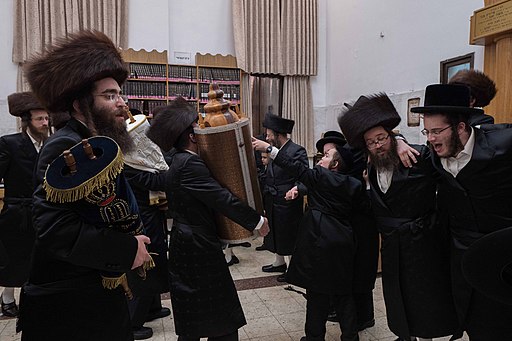
With this thought, I see an irony in another Jewish tradition that comes at this time of year, called Simchat (“sim-KHAHT”) Torah, meaning “Rejoicing with the Torah.” Right after the feast of Sukkot is over, the the Torah scrolls are rewound back to the beginning and the next year’s reading cycle begins at Genesis 1:1 again.

This is an occasion of much rejoicing, and the object of their joy is the fact that God gave them his word, the Torah. They literally dance around the synagogue with the Torah scrolls praising God for the Scriptures. Why is it that they are so radically convinced of God’s goodness even in the passages that Christians find most difficult?

I think this is partly because they have understood the biblical culture better than Western Christians who find them so foreign. As I’ve studied the Torah, I’ve found the loving kindness of God in the books I have avoided, and this has deepened my understanding of the faithfulness of my Father in heaven.

Both the lesson of the Sukkah, God’s protection in the desert, and Simchat Torah, rejoicing in his Word, help answer the insecurity I feel at this time of worry and adversity.

I’m convinced, beyond a shadow of a doubt, of the goodness of God, even when it is hidden in difficult times or terrible events or even hard texts. His protection in the desert, his giving of his Word, and his very own sacrifice for us finally answer that question once and for all.

~~~~

Photos: RonAlmog [CC BY 2.0], Gady Munz Pikiwiki Israel [CC BY 2.5]

Gifts for a King! What is the Magi Story all About?

by Lois Tverberg

One of the stories of Christmas that seems to be most cryptic is that of the wise men. Who were they? Where did they come from? Why did they give Jesus the gifts they did? Why are they called magi and what does the word magi mean? Why do we sometimes call them kings? What is the significance of this story, and what does it say about Jesus?

Let’s take a look at the text:

After Jesus was born in Bethlehem in Judea, during the time of King Herod, Magi from the east came to Jerusalem and asked, “Where is the one who has been born king of the Jews? We saw his star in the east and have come to worship him.” When King Herod heard this he was disturbed, and all Jerusalem with him. When he had called together all the people’s chief priests and teachers of the law, he asked them where the Christ was to be born. “In Bethlehem in Judea,” they replied, “for this is what the prophet has written: “‘But you, Bethlehem, in the land of Judah, are by no means least among the rulers of Judah; for out of you will come a ruler who will be the shepherd of my people Israel.’” … On coming to the house, they saw the child with his mother Mary, and they bowed down and worshiped him. Then they opened their treasures and presented him with gifts of gold and of frankincense and of myrrh. (Matt. 2:1-6, 11)

Expecting a king

The first question that we should ask is, why are they expecting a king, and why is Herod concerned? The answer comes from looking back at some promises from the scriptures. In Micah 4, the prophet told of a messianic age when God would set everything right. Micah said that a king would arise from Bethlehem, the city where David had been born several hundred years before:

“But as for you, Bethlehem Ephrathah,
Too little to be among the clans of Judah,
From you One will go forth for
Me to be ruler in Israel.
His goings forth are from long ago,
From the days of eternity.” …
He will arise and shepherd His flock
In the strength of the LORD,
In the majesty of the name of the LORD His God. (Micah 5:2, 4)

This king that would come would be a descendent of David. This comes from a very important promise that God had made to King David, who had displayed great faith and love for God:

“‘I declare to you that the LORD will build a house for you: When your days are over and you go to be with your fathers, I will raise up your offspring to succeed you, one of your own sons, and I will establish his kingdom. He is the one who will build a house for me, and I will establish his throne forever. I will be his father, and he will be my son. I will never take my love away from him, as I took it away from your predecessor. I will set him over my house and my kingdom forever; his throne will be established forever.’” (1 Chron. 17:10b-14)

This is the one who Herod feared, this great king that God himself would bring into power.

Prophecies about this king

When a powerful king arises in a country, other kings would give him gifts to form alliances and show friendliness toward that nation. David and Solomon, Israel’s most powerful kings, formed many alliances with the nations around them. One story from Solomon’s life is even reminiscent of the story of the wise men:

When the queen of Sheba heard about the fame of Solomon and his relation to the name of the LORD, she came to test him with hard questions. Arriving at Jerusalem with a very great caravan — with camels carrying spices, large quantities of gold, and precious stones — she came to Solomon and talked with him about all that she had on her mind. … And she gave the king 120 talents of gold, large quantities of spices, and precious stones. Never again were so many spices brought in as those the queen of Sheba gave to King Solomon. (1 Kings 10:1-2, 10)

Interestingly, other prophecies describe this same thing occurring when the messianic age would come. In Isaiah 60 it says:

“Arise, shine, for your light has come, and the glory of the LORD rises upon you. See, darkness covers the earth and thick darkness is over the peoples, but the LORD rises upon you and his glory appears over you. Nations will come to your light, and kings to the brightness of your dawn. … The wealth on the seas will be brought to you, to you the riches of the nations will come. Herds of camels will cover your land, young camels of Midian and Ephah. And all from Sheba will come, bearing gold and frankincense and proclaiming the praise of the LORD. (Is 60:1-4, 6)

Psalm 72 prophesies a similar thing about the messianic king:

He will defend the afflicted among the people and save the children of the needy; he will crush the oppressor. He will endure as long as the sun, as long as the moon, through all generations. … He will rule from sea to sea and from the River to the ends of the earth. The desert tribes will bow before him and his enemies will lick the dust. The kings of Tarshish and of distant shores will bring tribute to him; the kings of Sheba and Seba will present him gifts. All kings will bow down to him and all nations will serve him. For he will deliver the needy who cry out, the afflicted who have no one to help. He will take pity on the weak and the needy and save the needy from death. He will rescue them from oppression and violence, for precious is their blood in his sight. Long may he live! May gold from Sheba be given him. (Ps. 72: 4-5, 8-15) 

Gifts from Sheba

In all three of these stories, royalty from Sheba would come bearing gifts, including gold, precious stones, and spices including frankincense. Where is Sheba? It is at the southern end of the Arabian peninsula, where Yemen is today. It was known in ancient times as possessing great wealth — gold, jewels and spices.

Spices don’t seem very precious to us, but in ancient times, some spices and aromatic oils were worth more than their weight in diamonds because of their rarity and use as perfumes, incense and medicine. Herod gained much of his fantastic wealth by trading in spices and regulating the trading routes.

To transport them over 1,800 miles through the dangerously dry, barren Arabian desert, camels were the only animals that could be used. From these Old Testament prophecies we can get some reason of why the tradition was that royalty would come from the east, and that they would be on camels.

Who are the magi?

In different text translations the travelers are called wise men, magi or astrologers. The term “wise men,” hakamim, is often used in the Old Testament to describe a pagan king’s counselors that are schooled in the magical arts, and are often mentioned with magicians and diviners.

Pagan kings like the Pharaoh in Egypt had magicians who interpreted dreams and imitated Moses’ miracles. Nebuchadnezzar, the Babylonian king, had wise men and magicians as well. These “spiritual advisors” were respected counselors and probably also acted as ambassadors. When they learned by some kind of divination that a great king had arisen in Israel, most likely the pagan kings had sent them with riches to deliver to this powerful new ruler, to pay homage for their countries.

We are unsure of what type of celestial event the star was or how the wise men interpreted it, but through some spiritual means they learned that a great king had been born in Israel. This says something about the impact the coming of Christ had on the spiritual world. We hear about angels rejoicing, but the news of Jesus’ coming shook the rest of the unseen world as well!

In the scriptures we see other places where God reveals his plans to foreign diviners. In a strange parallel to this story, Balaam, another pagan magician, prophesied about the rise of a king in Israel, and even associates him with a star:

“I see him, but not now; I behold him, but not near. A star rises from Jacob; a scepter comes forth from Israel… Edom will be conquered; Seir, his enemy, will be conquered, but Israel will grow strong. Numbers 24:17-18

Perhaps the reason Herod feared Jesus is he knew this prophecy said that he, an Edomite, would fall to the true king of the Jews.

What are the Frankincense and Myrrh for?

Both frankincense and myrrh are purified from aromatic tree saps into either powders or oils. They would have been gifts more precious than the gold, because of their rarity and the tremendous expense in transporting them: but why were they appropriate for Jesus, this newborn king they had come to worship?

Remember that in biblical times, a king was not “crowned” in a coronation ceremony, he was anointed with oil. This was olive oil blended with myrrh and some other of the most expensive fragrances known, and would be like liquid diamonds in terms of expense.The anointed king would have an aroma that would say that he was the one chosen by God. Kings would wear fragrances other times after they were anointed to show their kingliness. Psalm 45, about King David, says:

Therefore God, your God, has anointed you
With the oil of joy above your fellows.
All Your garments are fragrant
with myrrh and aloes and cassia;
Kings’ daughters are among your noble ladies;
At your right hand stands the queen in gold from Ophir. (Ps 45:7-9)

And about King Solomon it says:

What is this coming up from the wilderness
Like columns of smoke,
Perfumed with myrrh and frankincense,
With all scented powders of the merchant?
Behold, it is the carriage of Solomon. (Songs 3:6)

So, perhaps the wise men had brought these precious oils to anoint the king, the prophesied son of David. What is most interesting is that the Hebrew word for anointed is Moshiach, “Messiah.” In Greek, the same word is Christ. So every time we say Jesus Christ, we are calling Jesus the “Anointed King.” So the wise men were proclaiming Jesus as the “anointed one,” the Messiah, the Christ, the King of Kings!

~~~~

Photos: Heinrich Hofmann [Public domain]; Inbal Malca on Unsplash; A Peaceful Christmas, [Public domain]

God With Us

by Lois Tverberg

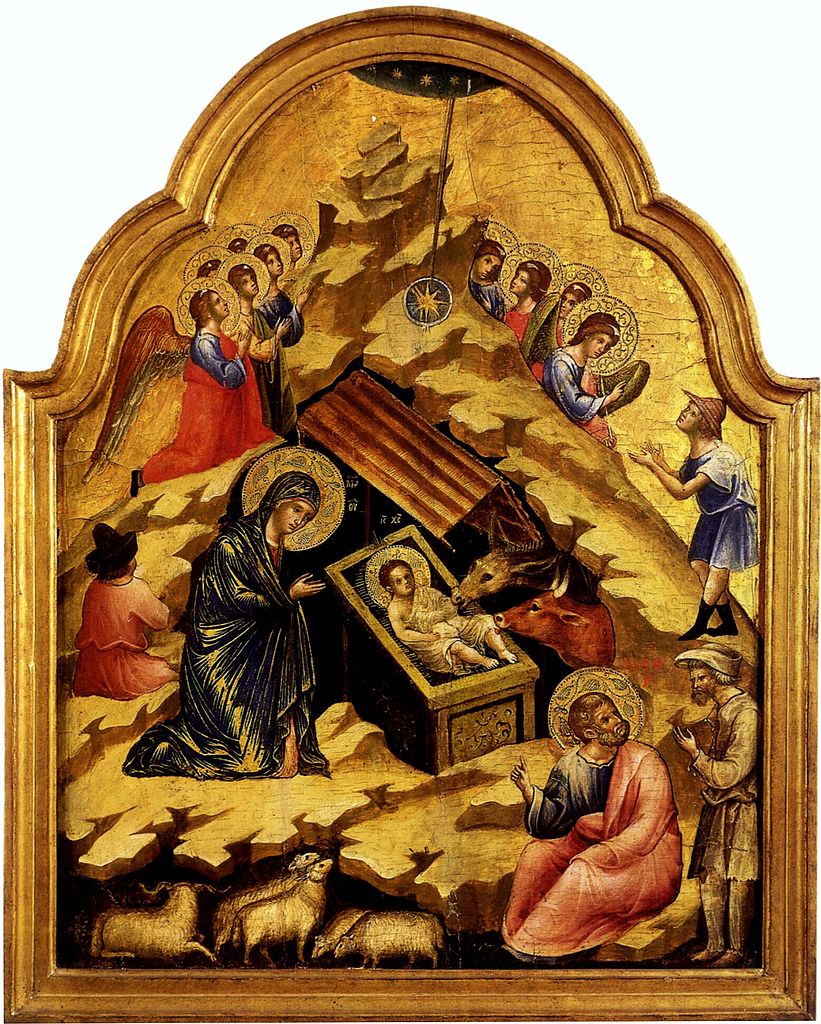
Nativity IconWhen we read the Christmas story, we focus on the idea that in Jesus Christ, God came to dwell with us, and we see it as a miracle that for a short time God would come so close to lowly humanity. But if we examine the rest of the Scriptures, it becomes evident that this has been God’s goal from the very beginning, and will finally be reached in Revelation.


When God first made man and woman, they dwelled with him in the Garden of Eden; after they sinned, they were cast out of God’s presence. This is the fundamental consequence of sin – the breach of intimacy with God. But God immediately began to repair the breach by making a covenant with Abraham, and later with Israel. When the covenant with Israel was first made and before it was broken, seventy elders could enter God’s presence and not suffer harm (Exodus 24:9-14). God had begun to mend the relationship between mankind and himself, so that a few people could enter his presence once again, even if only temporarily.

God then gave the the Israelites instructions to make a tabernacle, saying “Then have them make a sanctuary for me, and I will dwell among them” (Ex. 25:8). Interestingly, his goal is not to dwell in it, but to dwell among them. His goal was to have intimacy with his people, for them to live in his presence. This points ahead to God’s final goal of his presence among his people in Revelation:

And I heard a loud voice from the throne, saying, “Behold, the tabernacle of God is among men, and he will dwell among them, and they shall be his people, and God himself will be among them, and he will wipe away every tear from their eyes; and there will no longer be any death; there will no longer be any mourning, or crying, or pain; the first things have passed away.” (Revelation. 21:3-4)

Christ’s coming to dwell on earth is both a picture of God’s ultimate goal and God’s means of accomplishing that goal. In Christ, God walked, talked, laughed and cried with his people, and showed them his great love for them. By dying for their sins, God took on the worst of human experiences, and was intimately with his people in the depths of life’s sorrows. But through the atonement that this provided, he has opened the door for us to live forever in his presence as well. In this sense, God has most fully achieved his goal of dwelling forever among His people.


Photo: http://www.aiwaz.net/panopticon/lorenzo-veneziano/gc516

Prepare the Way for the Lord

by Lois Tverberg

In the desert prepare the way for the LORD; make straight in the wilderness a highway for our God. Every valley shall be raised up, every mountain and hill made low; the rough ground shall become level, the rugged places a plain. (Isaiah 40:3)


The scriptures say that John was the voice crying out, “In the wilderness, prepare the way for the LORD.” What does that mean?

One ancient idea behind this line is that before a great king could visit a region, a messenger would be sent ahead to announce that the way must be prepared. After the winter rains, roads may be potholed or obstructed by debris. Before a royal caravan traveled on them, they needed to be repaired. The people of the region would also prepare themselves and their villages for their royal visitors too.

When I visited Uganda years ago, they preserved a cultural memory of “preparing the way.” As we approached the church group that was expecting us, they went out and lined the road, waving branches and singing as we arrived.

John the Baptist

You might wonder how this prophecy was fulfilled by John the Baptist. Jesus said that John was the “Elijah” who was to come. He was speaking of the prophecy in Malachi 4:5-6 that says,

See, I will send you the prophet Elijah before that great and dreadful day of the LORD comes. He will turn the hearts of the fathers to their children, and the hearts of the children to their fathers; or else I will come and strike the land with a curse.

John was calling the people to purify themselves by repentance. The Jews already had the ceremony of ritual bathing that purified ceremonial uncleanness. But John had a different idea — that a person can become unclean from sin, not just ritual impurity. He was calling Jews to not lean on the fact that they were “sons of Abraham,” but to repent of their sins, personally commit themselves to the covenant, and enthrone God over their lives, and to enter God’s “Kingdom.”

Because of John’s work, when Jesus arrived, people were prepared for his ministry of the “kingdom of God,” in which he also called them to enter under God’s reign. Jesus explained that it also was his own kingdom, because he was the royal King, the Messiah that God sent.

FieldJesus talked about seed falling on good soils or bad soils, on rocks or thorns, as a picture of the hearts of people and how they receive God’s word. John had been preparing the way by plowing the “rough ground” and making “rugged places a plain,” making people ready to repent, turn their lives around, and accept the atonement of Jesus for their sins.


Photo: Muffet

The News to the Magi

by Lois Tverberg

Now after Jesus was born in Bethlehem of Judea in the days of Herod the king, magi from the east arrived in Jerusalem, saying, “Where is He who has been born King of the Jews? For we saw His star in the east and have come to worship Him.” (Matthew 2:1-2)


To most of us, the story of the wise men is strange. Who were they? Why would they look for a king because of a star? In different translations the travelers are called wise men, magi or astrologers. The term “wise men” (hakamim) is often used to describe a pagan king’s counselors that are schooled in the magical arts, and are often mentioned with magicians and diviners. It was common that pagan kings had magicians. We hear about them interpreting dreams of Pharoah and Nebuchadnezzar, and trying to reproduce the miracles of Moses.

One of these diviners who lived 1500 years before Jesus made a prophecy that is important for understanding why they were looking for a star. Balaam was a powerful, internationally known magician who was hired by a king to put a curse on the Israelites. But instead, God forced him to bless them and prophesy about their future. He said:

I see him, but not now; I behold him, but not near. A star rises from Jacob; a scepter comes forth from Israel… Numbers 24:17-18

Stars in Sky

The imagery of stars is closely associated with kings, and kings were poetically described as stars in the heavens. The poetic parallel of the word star in this passage is “scepter,” which certainly is a kingly image. The word scepter also means “comet,” also hinting that there was a tie between celestial events and earthly kings. It seems logical that the messianic king that the Jews expected was associated with a “star rising from Jacob” (meaning Israel), a celestial event that announced his arrival. Astronomers are still speculating what event was associated with Jesus and how the wise men interpreted it. It seems that when they learned of the coming of this powerful figure, most likely the pagan kings had sent them with riches to deliver to this new ruler to pay homage for their countries.

It is interesting to note that these pagan magicians probably also used divination to gain this news. This tells us how the rest of the spiritual world reacted to the coming of Jesus. We know that the angels rejoiced to see that he was born. But it seems that all of the spiritual world was also in an uproar about the coming of this king! Not only were the angels telling the shepherds, but demons were telling the pagan magicians in distant countries about the powerful king who had arrived on earth. They knew that he would be king of all creation, and that he was more than human – he was the Son of God who would have a unique authority over the spiritual world that made the demons shake in fear. We should be reminded of the great authority and power of Christ, whose coming was not just earth-shattering, but “heaven-shattering,” rocking the spiritual world as well.


Photo: Joe Parks

What’s the Good News?

by Lois Tverberg

But the angel said to them, ‘Do not be afraid; for behold, I bring you good news of great joy which will be for all the people; for today in the city of David there has been born to you a Savior, who is Christ the Lord. (Luke 2:10-11)

NewspapersPeople who lived through World War II often say that there was no greater joy than on May 8, 1945, when the victory was declared in Europe. More recently, the scenes most remember in our lifetime with joy are the felling of the Berlin Wall, and recently, the toppling of the statue of Saddam Hussein. Iraqis were shouting for joy, and many who had lived in fear of torture and murder for decades said that they felt like they had been “reborn.” In all of these cases, the “good news” was that of the end of a war, or a removal of an evil political power. It was as if a nightmare was suddenly over, and a new morning had come.

Interestingly, the word in Greek that we translate “good news” or “gospel,” euaggelion, has exactly that connotation in Greek. It is great news of a victory in war, or the rise of a powerful new king. It is a translation of the Hebrew word besorah, which is wonderful news of national importance about a political change, or war won.

When we understand that the main messianic image of Jesus is that of a king, we see how this fits into what the angels were saying. They were proclaiming the news to the whole world that a new king had come, the one God had anointed (Christ) to be ruler (Lord) over all. When Paul called himself an “ambassador of Christ,” proclaiming the “gospel of the kingdom,” he was also really saying that the anointed king of the world had come.(1) Although Caesar may seem to be in power, Paul’s mission was to be a representative to the real king to proclaim his victory and invite people to enter under his reign.

Let us not forget that we serve a victorious king, who has won the war against sin and death. And may we spread the good news of his reign everywhere on earth.


(1) See the article “A Hebraic Look at the Gospel and its Surprising Bearers”

Photo: Gérald Garitan